
Curated by Ivan D’Alberto
Starting from a youthful anecdote that completely changed the career of Nicola Maria Martino, this exhibition is the result of a comparison between two moments considered by critics to be among the most important in his artistic research: the conceptual-behavioral actions of the early 1970s and his return, in the second half of the same decade, to themes and techniques rooted in postmodern painting. The exhibition is enriched by the screening of an exclusive video interview with the artist, created by stude nts from the Liceo “MiBe” in Pescara (Multimedia program), directed by Professor Emilio Di Donato, and by several re -performances of Nicola Maria Martino’s works, carried out by other students from the same high school (Fine Arts program), directed by Rogo Teatro of Claudia Di Domenica and Elena Mastracci, in collaboration with Professor Silvia Pennese.
Nicola Maria Martino is considered one of those artists who, due to his visionary capacity, was able to anticipate several cultural phenomena that profoundly influenced the evolution of art history. Being a pioneer doesn’t always result in immediate positive outcomes, and som e figures from the past have lived this experience on their own skin, remaining “in the shadows” for a long time and only being brought into the “light” later on, eventually being considered “revolutionary.” Visionary ideas are sometimes seen as a “system error,” especially when they collide with decisions aimed at characterizing specific historical periods. In such dynamics, those who anticipate the times can be seen as a “problem” —a disruptive element that challenges certain choices. Nicola Maria Martino could represent this very “system error,” but he was not relegated to the shadows; on the contrary, the Apulian artist managed to sidestep these ambiguous mechanisms, positioning himself in a comfort zone where independent figures are often found. People like Martino are particularly fascinating because, in addition to being considered a “short circuit,” they bring the cultural debate back to the human dimension.
Humanity is one of the themes that defines the exhibition a Roma i sogni si realizzano ancora (In Rome, dreams still come true). The entire exhibition project stems from a youthful anecdote that completely changed the artist’s career. After completing his studies at the Academy, and against his father’s wishes, Martino decided to stay in the capital to pursue his greatest dream: to become a painter. The first periods were tough, with makeshift accommodations and little money, but one evening, on his birthda y, while celebrating in a Roman tavern, something extraordinary happened. Even though he couldn’t afford to pay for dinner for his only guest, he decided to take him to a restaurant. There, he noticed a man sitting alone at a table. Martino had a bottle of sparkling wine brought to the table to include this stranger in the celebration. This generous gesture turned out to be a stroke of luck; the man was someone very important, and that same evening, he asked Martino to show him a couple of his paintings. But that wasn’t all; the man asked Martino for a promise: to produce one painting a month for him, so that he could buy them. Some time later, Martino also received an offer to teach at a high school in Rome, and his career took a different direction. This s tory is quite romantic, and in addition to giving the exhibition its title, it highlights a very specific historical period, when, in Rome, dreams could still come true. What makes the anecdote truly fascinating is the artist’s desire to be the protagonist of his own present, defying fate and embarking on an adventure without knowing how it would end. Never before has fortune helped an audacious individual so much in pursuing a great desire. This attitude has always accompanied Nicola Maria Martino’s career, as he has consistently followed his intuition, disregarding everything and everyone. This happened at various stages of his research, but it is particularly evident in the 1970s, which defined his approach.
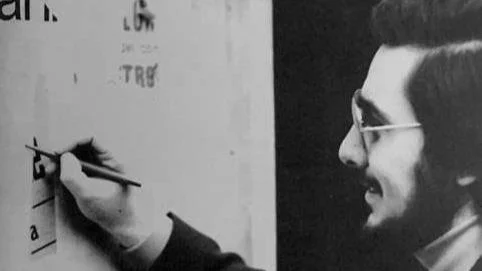
The exhibition is, in fact, the result of a comparison between two moments deemed by art critics to be among the most important of his work: the conceptual-behavioral actions of the early 1970s and the return, in the second half of the decade, to themes and techniques belonging to a postmodern form of painting. By the late 1960s, Martino had already anticipated several phenomena by creating actions such as L‘artista firma i muri (1969), Uscire dalla porta della critica (1970), Ombra d’artista (1971), Artista italiano in vendita (1972), and L’artista non siede mai in panchina (1973). These works feature Nicola Maria Martino with a precise look, that of a dandy, in paradoxical situations where cynicism and irony serve as the key to describe the condition of artists at the time, completely immersed in the “poor culture” so celebrated by Germano Celant. Nicola Maria Martino strictly followed the teachings of the theorist of Arte Povera (Flash Art no. 5, November – December 1967), where the artist is always an artist, in everyday life. The artist is first and foremost a philosopher, not necessarily needing to produce an object of art, and the mere gesture or attitude can be sufficient to communicate creative thought. In the behavioral actions, the artist is the artwork—there is no need for artistic production, and performances aim to convey precise messages, to stimulate questions and responses from viewers. The dematerialization of the artwork, combined with a taste for the ephemeral, forms the tableau vivant of this artist, who confirms his desire to be part of a historical period entirely focused on the “here and now.” In 1974, during the height of the conceptual boom that flooded Italy and much of Europe, Martino changed direction, diving into the recovery of painting. The series Colore Dolore (1976) was created at this time, embodying his desire to return to a visual medium that had been declared “dead” in those years. Martino’s choice became “painful” because recovering a medium considered outdated and unrepresentative of a particular period required much effort and was, in some cases, quite “bitter.” The artist, howev er, felt a strong push towards this medium, a drive that became unstoppable and has accompanied him until today. His painting is essential, with earthy tones often painted on grid paper. These works retain a “poor” taste, the result of an aesthetic search focused on universal philosophical themes that avoid narrative devices. Martino’s skill lies in translating the “poor” vision into his painting, achieving results that Celant himself might have defined as “primary.”
Nicola Maria Martino follows a “kleptomanic” methodology through the improper use of materials, like grid paper torn from a school notebook. The work appears “elementary,” recovering an “essential” form of artistic practice, evoking an epiphanic tone that proposes an original tonal syntax, as if to re-educate an audience that has become unaccustomed to painting. The use of grid paper, typically found in elementary school, attests to the artist’s desire to offer an educational process aimed at rediscovering painting, which, by the second half of the 1970s, had become a mental pursuit. Martino’s work anticipates the experience of Transavantgarde (Flash Art no. 92-93, October – November 1979), and this has allowed him to realize another dream: to free himself f rom a system that would have wanted him to align with market demands, once again becoming the protagonist of his personal history.
Nicola Maria Martino was born in Lesina (FG) in 1946 and lives and works in Ripa Teatina (CH). He moved with his family to Como, where he attended a scientific high school for two years before enrolling in a technical institute. After obtaining an artistic high school diploma in order to gain access to the Academy of Fine Arts, in 1965 he moved to Rome. There he studied Scenography for one year, then changed his course of study and enrolled in Decoration. He trained under Sante Monachesi—signing the manifesto AGRÀ in 1968—and became both his disciple and friend.
In 1970 he graduated with a thesis supervised by Maurizio Calvesi on the concept of erasure (cancellatura), theorizing the necessary tabula rasa that a student must perform with respect to academic apprenticeship. In 1972 he was appointed assistant in Rome, and in 1984 he became Professor of Decoration at the Academy of Fine Arts in Turin. From 1993 to 2010 he served as Director of the Academy of Fine Arts in Sassari, and subsequently as Commissioner with the functions of Director of the Academy of Fine Arts in Turin. Since 2018, he has been President of the Academy of Fine Arts in Foggia.
His active participation in the art scene began in the early 1970s, when he produced conceptual and behavioral interventions and actions—among his companions during this period were Mimmo Germanà and Gino De Dominicis—aimed at dismantling pre-established systems and purifying the art world from the “bacteria” of the market. In the mid-1970s he abandoned the analytical procedures and dematerialization of conceptualism, anticipating themes and techniques of the return to painting within postmodern discourse. To this period belong the Bra series (1974) and Color Pain (1976), which the artist considers a manifesto of reappearance, emergence, and a nostalgic return to the labyrinths of painting: “The sense of wonder lies in thinking that people still paint pictures,” the artist suggests in a poetic text.
Since 1976, he has devoted himself entirely to the practice of painting as a search for mythology understood as both universal and personal memory, defined through a restrained expressiveness that is at once luminous and shadowed. This unfolds across broad chromatic expanses traversed by lyrical and restless signs and figures, intellectually elaborated citations with references to de Chirico, Chagall, Kandinsky, and Licini.
In 1980, Cesare Vivaldi featured him in Bolaffi and introduced him to the NRA Gallery in Paris. In the same year, he was invited to the Venice Biennale, marking the beginning of numerous participations in group and solo exhibitions in Italy and abroad. The works of this period reveal a fully mature and self-aware artistic vision, expressed through a sensitive and original pictorial language that establishes him as one of the protagonists of the revival of painting that characterized the decade.
From the mid-1980s onward, Martino’s painting evolves from emotionally charged narration toward a luminous and spatial synthesis, achieving an intense and sensitive essentiality expressed through a deep, symbolic blue. After the most significant milestones of his pictorial journey—Illusioni folli, Nemesis, Panta rei, and Grande mare—the artist moves on to the Ferdinandea and Isole cycles (silent works imbued with melancholy and a more reflective tone), employing a language poised between abstraction and figuration that culminates in the fragmented and shifting planes of Modernissimo.
The cycle begun in 1997 consists of small canvases in which Martino rediscovers a more intimate dimension, still deeply Mediterranean, recalling the enchanted apparitions of Ritorno a casa (1993). This phase flows into the balance of luminous and intense chromatic fields, interwoven with poetic incidents and traces of lived experience found in his most recent works.
Throughout his long intellectual journey, Martino has exhibited in numerous galleries in Italy and abroad, and his works are held in prestigious international collections. His work has been discussed, among others, by Luca Beatrice, Antonio Bisaccia, Cecilia Casorati, Maurizio Coccia, Guido Curto, Franco Fanelli, Giuseppe Gatt, Guglielmo Gigliotti, Giovanni Iovane, Filiberto Menna, Italo Mussa, Massimo Onofri, Ida Panicelli, Giancarlo Politi, Lucia Spadano, Cesare Vivaldi, Antonello Tolve, and Ivan D’Alberto.
Via Caravaggio, 125 - 65125 Pescara
YAG Garage
YAG GARAGE
To provide the best experiences, we use technologies such as cookies to store and/or access device information. Consent to these technologies will allow us to process data such as browsing behaviour or unique IDs on this site. Not consenting or withdrawing consent may adversely affect certain features and functions.