
Lei Tiantian, a Chinese-born student, has shown remarkable artistic sensitivity and maturity from the very beginning. Lively, versatile, and curious, she is an acute experimenter of material in its various practices and techniques. She is a talented artist and a world citizen without borders. She studied in Milan, Florence, and on an Erasmus program in Vienna, delving into sculptural practices and extending her research into expressions that address the concept of dematerialization — explored through multimedia technologies and conceptual frameworks that fascinate her.
She wrote a thesis on the dematerialization of the artwork, while still maintaining in her own pieces a strong bond with the direct relationship to material. Determined to approach art from multiple perspectives, this year she also embraced design and multimedia communication techniques to gain additional tools of knowledge. For Lei Tiantian, it is essential to develop diverse methodologies to be used freely —tools to be applied, compared, and explored to reach new expressive languages within the poetic expe rience of sculpture.
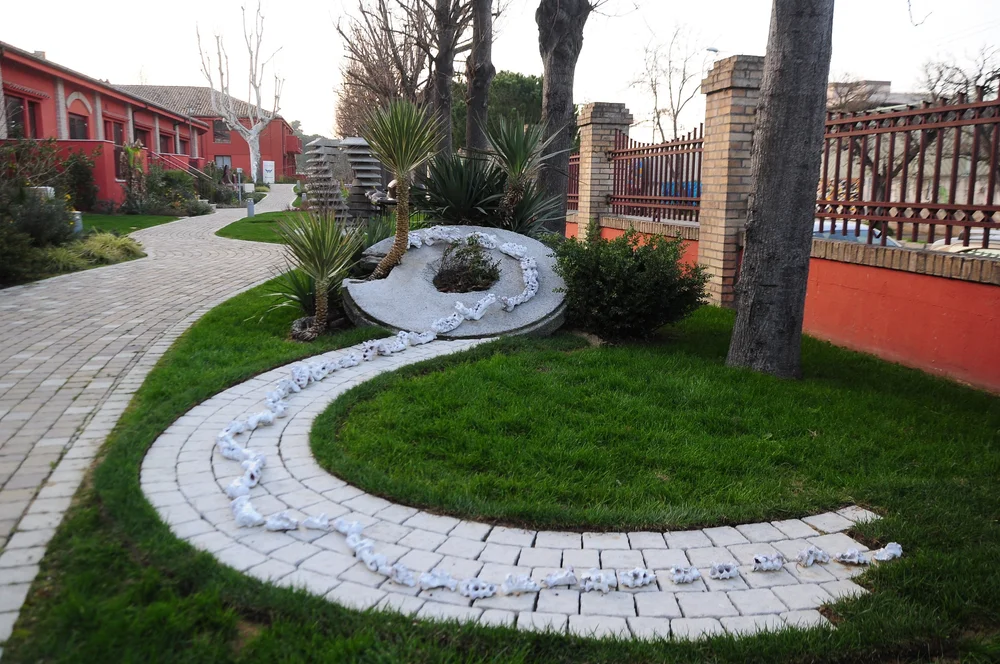
Her work Spina dorsale, acquired for the Giardini d’Arte di Via Caravaggio, is in ceramic and presents an open conceptual theme. The sculpture is an imaginative “spine” —both a structure and a concept. It is not faithful to anatomical morphology but emerges from sensitive, direc t experimentation with plastic elements manipulated forcefully by hand, without tools, imprinting the marks of her own hands, and creating knots and voids in succession, reminiscent of a vertebral chain. The upward spiral system becom es an organic movement that enters into direct dialogue with the ground, expressing a dynamic, vital sign of the relationship between spirit and nature, between the organic and the mental.


To provide the best experiences, we use technologies such as cookies to store and/or access device information. Consent to these technologies will allow us to process data such as browsing behaviour or unique IDs on this site. Not consenting or withdrawing consent may adversely affect certain features and functions.